How to Choose the Right Foam Insert for a Custom EVA Case
Choosing the right foam insert is about more than protection. Learn how product shape, accessories, usability and project volume can help determine the right insert structure for your custom EVA case.
How to Choose the Right Foam Insert for a Custom EVA Case
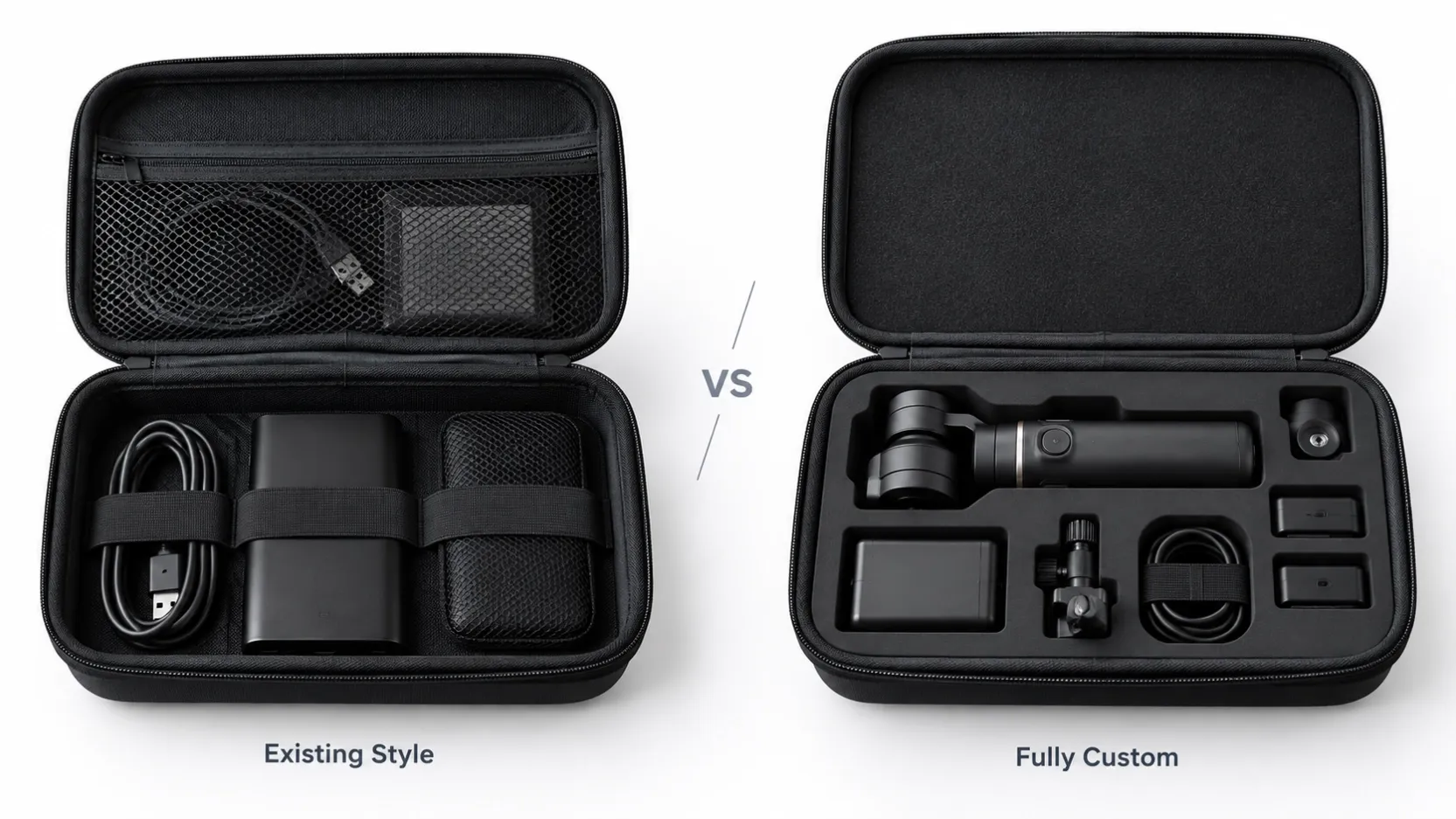
A good foam insert should do more than hold your product in place. It should protect the equipment, organize the accessories and make the complete kit easy to use.
For buyers developing a custom EVA case, the best insert structure usually depends on the product shape, accessory layout, appearance requirements and expected order quantity.
1. Start With the Product, Not the Foam
Before choosing an insert, look at everything that needs to go inside the case: the main device, cables, chargers, probes, adapters, manuals and other accessories.
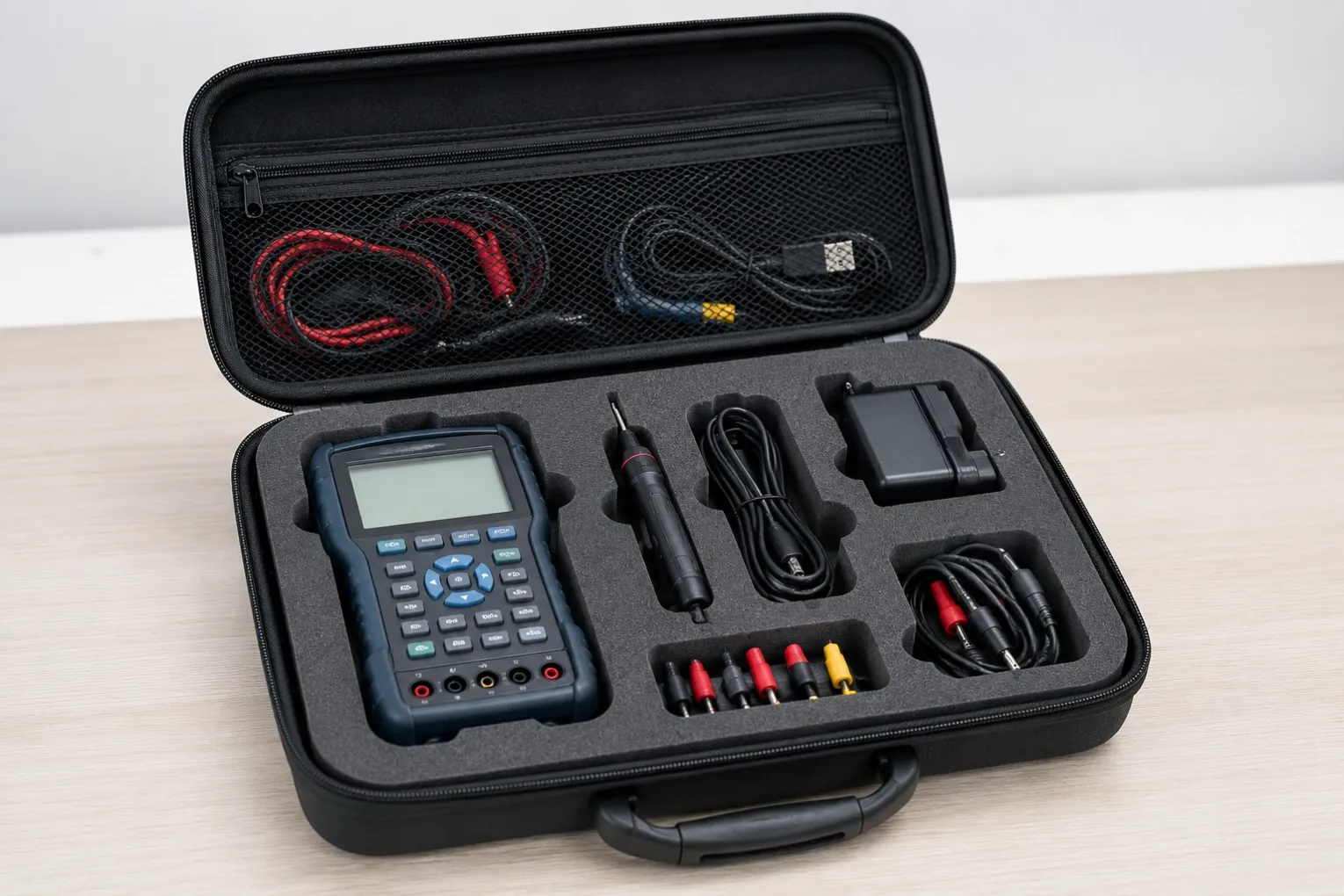
A medical device with several accessories may need a very different layout from a handheld test instrument with probes and cables. The goal is to give each important component a clear position without making the case unnecessarily large.
2. When Is CNC-Cut Foam a Good Choice?
CNC-cut foam is a practical option when products need clearly defined individual cavities. It works especially well for instruments, tools and equipment with different component shapes.
It is also useful during new product development because the layout can be adjusted relatively easily as the project evolves.
3. When Should You Consider a Molded Insert?
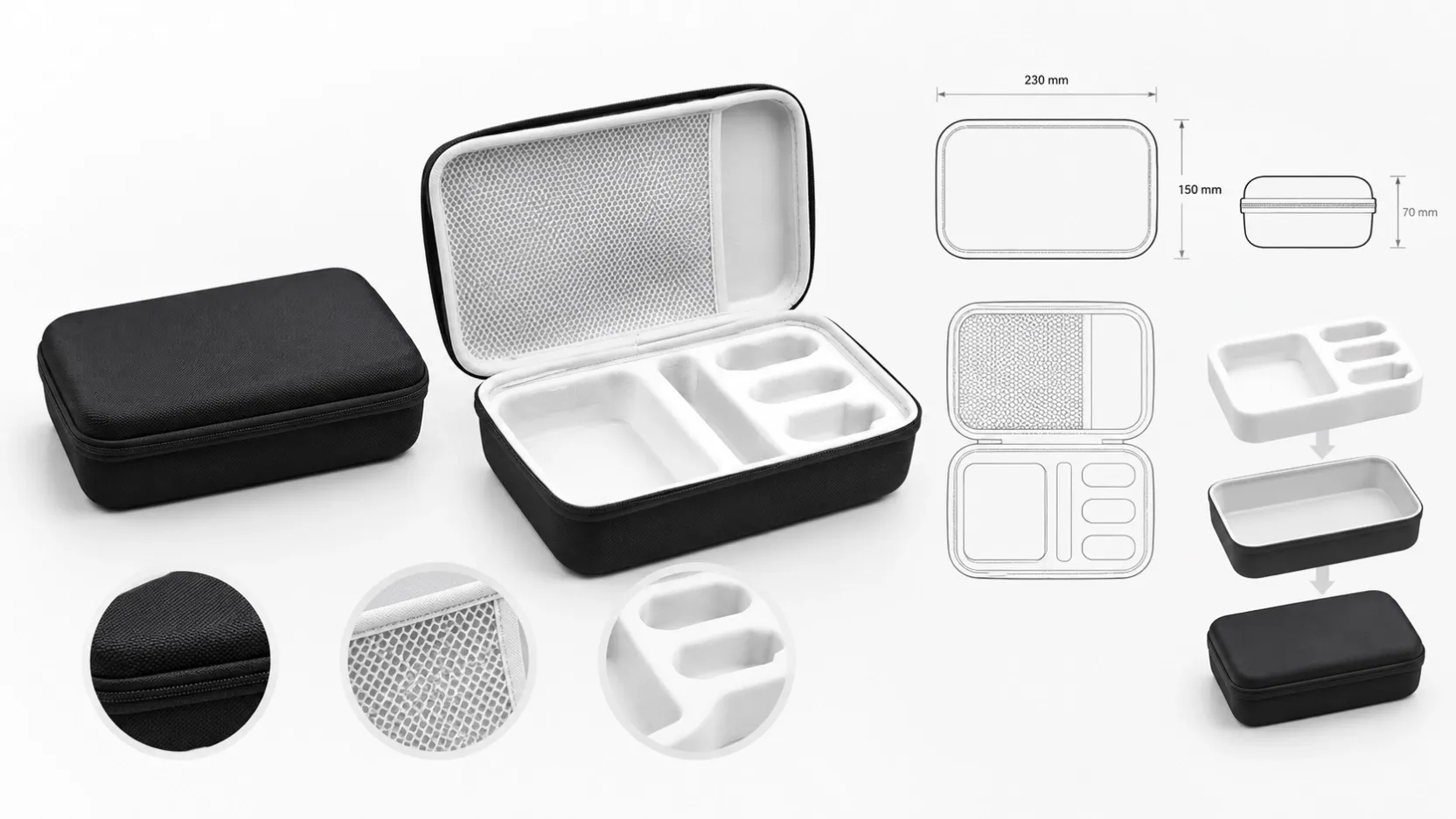
A molded insert can provide a cleaner, more integrated appearance. It can be a good choice when presentation, repeated use and a more finished interior are important.
However, the right choice should be based on the actual project rather than appearance alone. Product shape, quantity, tooling requirements and budget should all be considered before deciding.
4. Fit Matters — But Tighter Is Not Always Better
One common mistake is making the cavity as tight as possible. The product needs to stay secure during transport, but users should still be able to remove it comfortably.
Finger notches or small clearance areas can make frequently used equipment much easier to remove. For delicate surfaces, enough clearance should also be considered to avoid unnecessary rubbing or pressure.
5. Don't Forget Cables and Accessories
The main device is often only part of the kit. Chargers, cables, probes and adapters can create more layout problems than the device itself.
Depending on how the kit will be used, accessories can be placed in separate foam cavities, elastic holders or a mesh pocket in the lid. Frequently used components should remain easy to identify and access.
6. What Should You Send Before Prototype Development?
You do not need to have a finished case drawing before starting a custom EVA case project. The most useful information is usually:
- Product dimensions
- Photos or drawings
- A list of accessories that need to fit inside
- Estimated order quantity
- Logo or branding requirements
- Any special protection or presentation requirements
With this information, the case size and interior layout can be reviewed before prototype development.
Which Foam Insert Is Right for Your Project?
There is no single insert structure that works best for every EVA case. A simple instrument kit may work well with CNC-cut foam, while another project may benefit from a molded insert or a combination of foam and lid storage.
The important part is choosing the structure around how the product will actually be stored, transported and used.
Not sure which insert structure fits your product?
Send us your product dimensions, photos or drawings and accessory list. We can review the layout before prototype development.